

Hang on!
Don't just spade it!
It's very valuable to familiarise yourself with the snake varieties in our area, as the harmless ones can easily be mistaken for venomous snakes.
Our three common, dangerous snakes to look out for are the Puff Adder (ground), Boomslang (trees and roofs) and Night Adder (ground). You might, on an extremely rare occasion, encounter a Cape Cobra or Berg Adder, but they are not native to Rheenendal.
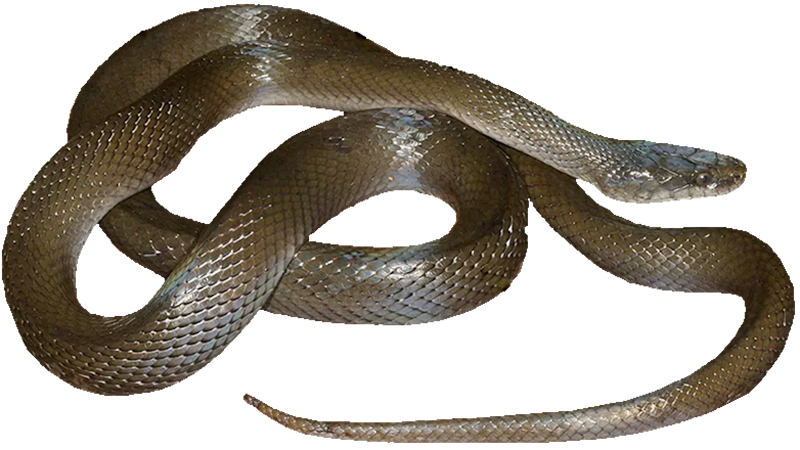
The rest are not life threatening and include the harmless Olive House Snakes (image on the right), Red-Lipped Heralds (aggressive, but bite is like a bee sting), Green Vine Snakes (often mistaken for a Boomslang), Mole Snakes, and Slug Eaters.
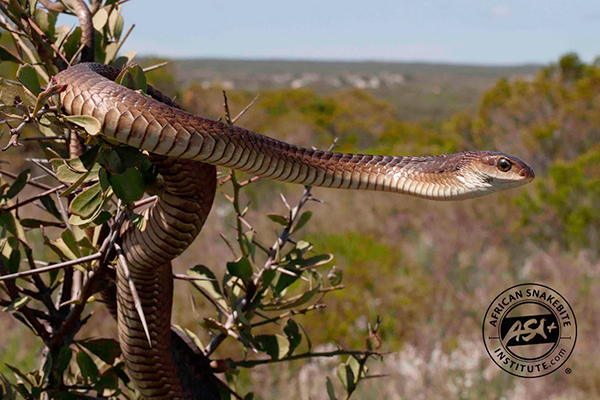
Note that in Rheenendal, our Boomslang is NOT green.
Males are black with yellow bellies, and females are dark olive brown. Both have huge eyes.
Watch Out for These Ones
Our Most Common Venomous Snakes


PUFF ADDER
Lazy
A plumb, very lazy snake, that seeks heat in grass and foot paths with slow-acting virulently cytotoxic (cell-destroying) venom
The bite is followed by immediate and severe pain, and rapid swelling and bruising at the bite site. Life-endangering effects (usually shock) appear 12 - 24 hours after the bite. The severe swelling may result in a loss of limb, if not treated.

BOOMSLANG
Shy
A fast, very shy snake that lives in trees and roofs, with hemotoxic venom (damaging the circulatory system and muscle tissue)
There is very little chance of ever being bitten by a Boomslang, as they usually flee as soon as possible. In contrast with popular belief, there's no need to be afraid of a Boomslang, as they will rush off at the slightest noise and won't attack a human or pet.


NIGHT ADDER
Nocturnal
A frog eater that hunts at night and lies around during the day, with mildly virulently cytotoxic (cell-destroying) venom
This nocturnal snake is common on ground level in gardens. Most bites result in only minimal swelling, but with painful enlargement of the glands in the affected limb. Symptoms usually disappear naturally, without medication, within a few days.
So, what to do...
when you get bitten:
To avoid getting bitten, wear long pants and boots when out in the field during summer. Be careful when lifting rubble or material that might have snakes resting underneath. And just generally watch your step when out for a walk – also at night.
But, in the rare case of being bitten by a snake:

01
Identify
It's very important to identify the snake, in order to receive the correct anti-venom. Take a photo, if possible, or make mental notes of its colour, shape and scales.

02
Stay Calm
It's obviously quite difficult, but do your best to stay calm. Do not run. Call for advice on treating the wound. Then call someone to come assist you with driving you to the hospital.

03
Wash the Wound
Just rinse the wound with cold water. Do not apply ice, boiling water, lotions or potions. Do not try to suck or cut out the venom. Do not ever apply a tourniquet, unless instructed to do so.

04
Go to Hospital
Go to hospital, even if you feel fine. Shock might set in later. Apply pressure to the wound on the way to the hospital. George Provincial Hospital is the best option for anti-venom.
Snake Identification & Removals
Brett Staegemann (Local Resident): 082 962 2703
Local Paramedic (Tuscan Hayward): 078 093 2238
George Provincial Hospital: 044 874 5122
Netcare Ambulance: 082 911
ER24 Ambulance: 084 124
Knysna Fire Department: 044 302 8911
Poison Information Helpline: 0861 555 777
African Snakebite Institute: 082 494 2039